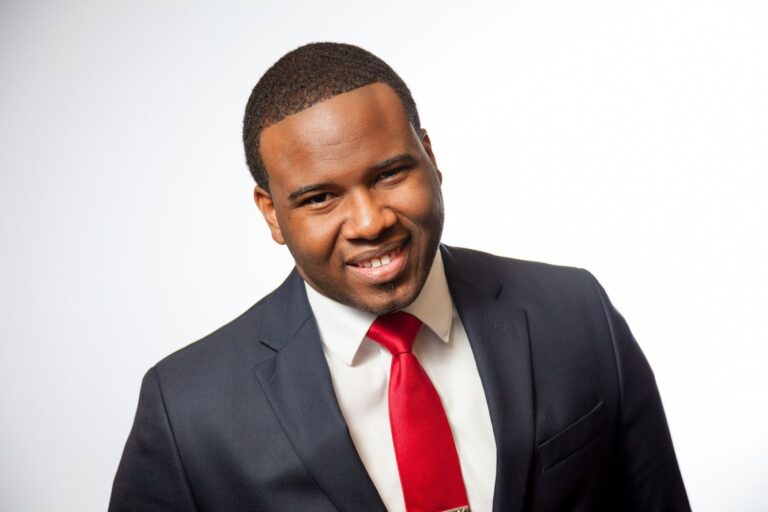
DALLAS — Republican Mike Immler is making government spending, public safety and what he describes as a lack of attention to southern Dallas County central to his campaign to unseat longtime Dallas County Judge Clay Jenkins in the Nov. 3 general election.
Immler, a Duncanville resident, told The DeSoto Tribune in an interview that he believes communities in southern Dallas County have not received the same level of attention and investment as areas farther north.
“I have seen the southern sector of Dallas County be neglected for the last 40 years that I’ve lived here,” Immler said. “The southern sector of Dallas County does not get the same attention, the same love, the same investment, the same priorities that North Dallas gets.”

Immler is challenging Jenkins, a Democrat who has served as Dallas County judge since 2011.
Jenkins had no Democratic primary opponent this year, while Immler ran unopposed in the Republican primary, setting up the countywide general election contest.
Despite the title, the Dallas County judge is not primarily a courtroom judge.
The county judge presides over the five-member Dallas County Commissioners Court with four county commissioners and helps oversee the county budget, tax rate and other county operations.
The county judge also serves as the county’s emergency management director.
Immler said he initially considered challenging Democratic U.S. Rep. Jasmine Crockett in Congressional District 30 but changed course after Dallas County Republican Party officials encouraged him to run for county judge.
His campaign is centered on fiscal responsibility, public safety and economic growth for small businesses.
Immler’s published platform calls for reviews of major county spending, clearer budget and contract information, support for sheriff, jail and court operations, and efforts to make county procurement more accessible to small businesses.
“I worked with small businesses, I know how to get things done, and I bring results that are proven over the last 40 years as well,” Immler said.
Immler’s campaign says he served for 30 years in the U.S. Air Force and reserve components, retiring as a colonel.
He later held legal, real estate, strategy and executive leadership positions with the Army & Air Force Exchange Service.
Jenkins, meanwhile, describes his approach to county government as focused on what he calls pragmatic, common-sense solutions aimed at creating opportunity and security for Dallas County residents.
Taxes emerge as a major campaign issue
Property taxes have become one of the clearest dividing points in the race.
During the interview, Immler said Dallas County residents had seen their taxes raised “12 of the last 15 years.”
If he was referring specifically to Dallas County’s adopted property tax rate, available records do not support that characterization.
KERA reported that Dallas County had held its tax rate steady or lowered it for the previous 16 years before commissioners approved an increase this year.
Property owners can still see their individual tax bills rise when taxable property values increase, even when a government’s tax rate remains unchanged or decreases.
For tax year 2026, Dallas County adopted a rate of 24.865 cents per $100 of taxable value, up from 21.55 cents the previous year.
The county’s voter-approval rate is 22.465 cents per $100. Because commissioners adopted a rate 2.4 cents above that threshold, voters will decide Nov. 3 whether the county may keep the additional amount.
If voters reject the measure, the rate will revert to the voter-approval rate.
County officials estimate the portion requiring voter approval would generate about $102.9 million.
Dallas County says the additional revenue would be used for programs aimed at reducing homelessness and encampments, expanding access to mental health treatment and supporting stable housing.
Immler criticized the proposal during the interview and characterized it as a 22% tax increase.
That percentage requires additional context.
Dallas County’s state-required tax notice says the maintenance-and-operations portion of the tax rate would be “effectively” increased by 22.02%.
The county’s overall adopted tax rate, however, increased from 21.55 cents to 24.865 cents per $100 of taxable value, an increase of about 15.4%.
The portion voters are being asked to approve is the additional 2.4 cents above the county’s voter-approval rate.
For a median taxable homestead valued at $268,056, Dallas County estimates the county tax bill at the adopted rate would be $666.52.
Last year, a median taxable homestead valued at $259,385 generated a county tax bill of $558.97.
Jenkins has defended putting the additional rate before voters while also arguing that the county should seek only the amount officials determined was necessary after revising the budget.
The Commissioners Court ultimately reduced the amount subject to voter approval to 2.4 cents.
Focus on southern Dallas County
Beyond taxes, Immler is placing particular emphasis on southern Dallas County as he makes his case to voters.
Asked what he would tell residents in DeSoto, Duncanville, Cedar Hill, Lancaster, Glenn Heights and other southern Dallas County communities, Immler said voters should consider whether they believe county government is delivering the services and investment they expect.
He criticized what he views as shortcomings in economic development, public safety and access to businesses and services in parts of southern Dallas County.
“If you’re satisfied with your crime rate, if you’re satisfied with your restaurant deserts, your hospital deserts, with your shopping center deserts, that’s fine. Keep what you want, keep what you have,” Immler said. “But I bring a different vision and a different background.”
Immler also said he would seek to represent residents across racial, ethnic and political lines if elected.
“I’m coming in to represent everybody, not special interests, not people that look like me, not people that talk like me, not people that grew up like me,” he said.
His argument that southern Dallas County has been neglected is a central theme of his candidacy and represents his assessment of county leadership.
Jenkins’ official county website says his administration is focused on serving families throughout Dallas County and making the county attractive to both residents and businesses.
First 90 days
If elected, Immler said he would not begin with an immediate overhaul of county government.
Instead, he said he would spend roughly his first 90 days assessing county operations, meeting with department leaders and evaluating what is working and where changes might be needed.
“When you come into a new organization as a CEO — and essentially that’s what the Dallas County judge is — first thing you want to do as a CEO in a new organization is do an evaluation or assessment,” Immler said.
The Nov. 3 election gives Dallas County voters a choice between Jenkins, who is seeking another term after more than 15 years in office, and Immler, who is arguing that his military, legal and executive background would bring a different approach to county government.
For Immler, much of that argument centers on southern Dallas County.
He said his goal would be to bring greater “energy, focus and investment” to communities in the southern part of the county if elected.
The DeSoto Tribune reached out to Dallas County Judge Clay Jenkins for comment but had not received a response as of publication.
About the Author