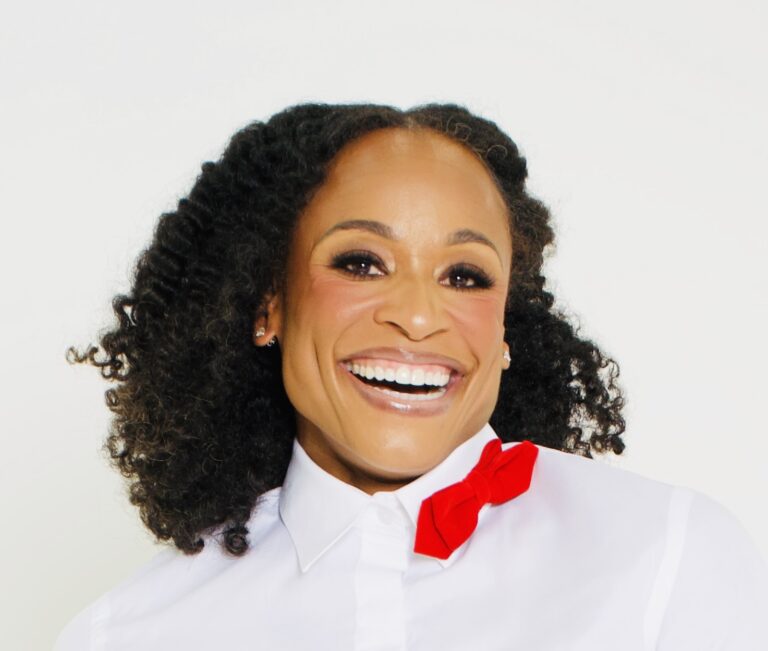
For many 23-year-olds, completing a bachelor’s degree may mark the culmination of years of work.
For DeSoto resident Rebekah Brown, it was only one step in an academic journey that began before she was old enough to drive.
Brown completed the requirements for her doctorate in curriculum and instruction at 23, adding the degree to an academic record that already included an associate degree, bachelor’s degree and master’s degree.

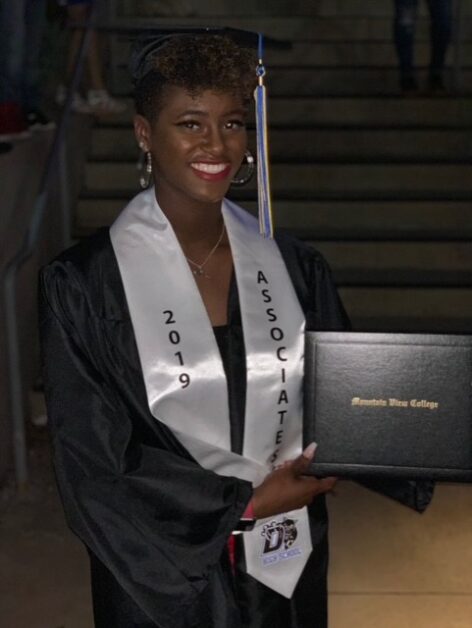
Her path toward higher education began at 13, when she started taking college courses during the summer before her freshman year of high school.
“I started taking college classes when I was 13, the summer before my freshman year of high school,” Brown told The DeSoto Tribune.
Brown continued taking college courses during the summers and throughout the school year while completing her regular high school coursework. Eventually, she accumulated enough credits to accelerate her high school education.
“I was taking those college classes during the summer, and then during the school year, every fall and winter semester, I would take two classes on top of my regular high school coursework,” Brown said. “By the time I was a sophomore, they told me I had enough credits to graduate the next year. So, I basically skipped junior year and went from sophomore to senior year.”
Brown said accelerating through school was not something she originally set out to accomplish.
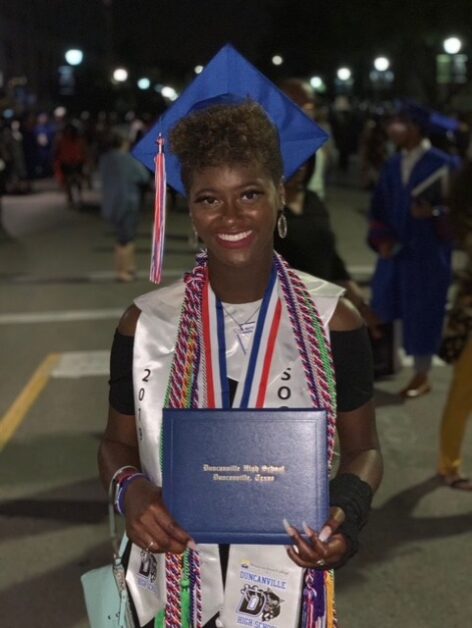
“It was all by accident,” Brown said. “It wasn’t like a goal I had set in mind. I was just doing it to earn my associate degree, and it just ended up being that way.”
Brown graduated from Duncanville High School but said she has lived in DeSoto throughout her life.
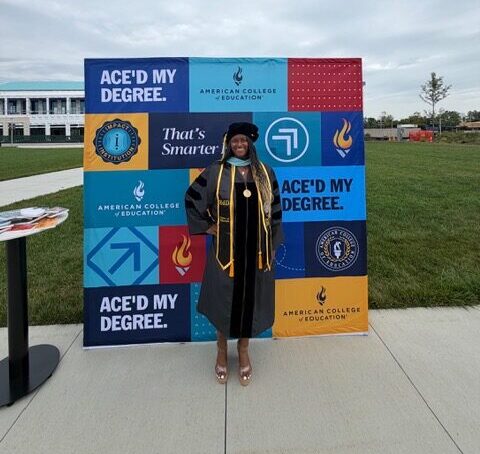
Her associate degree was in arts, while she majored in speech therapy for her bachelor’s degree. Brown later earned a master’s degree in special education from the University of North Dakota before pursuing a doctorate in curriculum and instruction at the American College of Education.
Brown said affordability was an important factor in selecting the American College of Education. She researched several doctoral programs before deciding the college offered an option that worked for her financially and academically.
“They have one of the cheapest doctorate programs,” Brown said. “When I was looking online at other doctorate programs, most were around $90,000 or $60,000. ACE’s was around $25,000.”
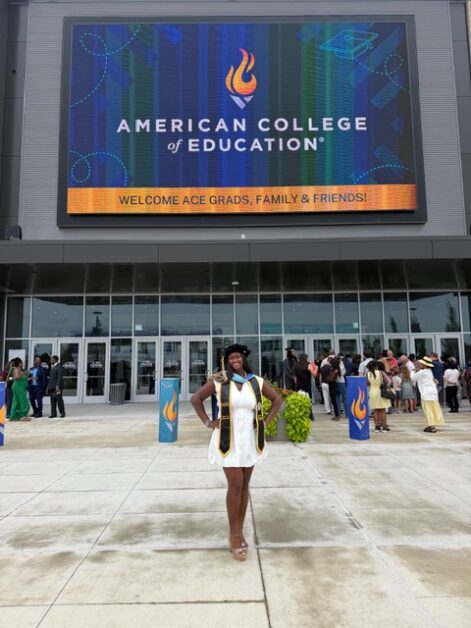
She also said the structure of the program made navigating her coursework easier because counselors automatically enrolled her in subsequent courses after she successfully completed prerequisite classes.
“I liked that, for the doctorate program, they schedule your classes for you,” Brown said. “I didn’t have to worry about, ‘What do I need to take next?’ The counselors just enrolled me in the next class after I passed whatever class I had to do before that one.”
Finishing what she started
Brown said continuing her education without taking a prolonged break was an intentional decision.
“It feels great. I’m happy I’m done,” Brown said. “I feel like if I had taken a break like most people did, I wouldn’t have gone back because I know myself. So, I just went all the way through and finished so I could worry about what I want to do for a career and things of that nature.”
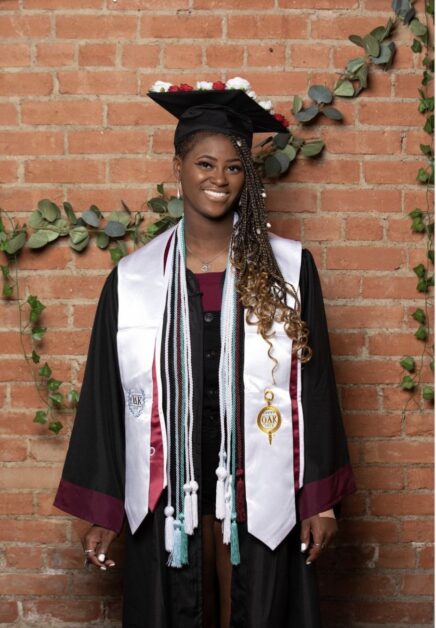
Brown defended her doctorate May 1, before her 24th birthday May 28. She later walked across the stage at commencement after turning 24.
“I’m happy I did it all the way through because now I’m done, and I still have my whole life ahead of me,” Brown said. “I can travel and do what I want to do.”
Throughout the process, Brown said organization played an important role in balancing her academic responsibilities with her personal life.
She relied heavily on planners and calendars to track discussion boards, assignments and deadlines while also making time for friends and family.

“My planner saved me a lot,” Brown said. “Having all of my discussion boards and assignments written down so I could see them helped a lot.”
When asked how she balanced her academic and social lives, Brown had a simple answer.
“Calendars,” she said with a laugh. “It’s all added to my phone, and I have a written calendar, too.”
Community helped her reach the finish line
Brown said completing the doctorate was a three-year process, and she credited members of her doctoral cohort with helping her navigate the program.
Students communicated through GroupMe and helped one another with questions and coursework. After spending years communicating remotely, members of the cohort met in person at graduation.
The group even developed a nickname for itself: the “struggle bus cohort.”
“It helped to have that community because sometimes I didn’t know what I was doing, and they would say, ‘Oh, it’s this,’” Brown said. “It helped to have that community. We were all going through the same thing and struggling together.”
Brown was also considerably younger than many of her classmates. She said some members of the cohort did not realize her age until they met her at graduation.
“I don’t think they really knew I was that young until graduation because we never really talked over the phone,” Brown said. “Nobody knew my age until graduation. They were like, ‘Oh, you’re a baby!’ I was like, ‘Yeah, I’m a baby. I’m just happy I’m done with school.”
Turning education into a career
Brown is already putting her education to work.
She is a special education teacher in Mansfield ISD and has worked in the district for four years. Her experience includes one year in speech therapy and three years as a special education co-teacher.
Her next goal is to use that classroom experience to help develop curriculum for students receiving special education services.
“I’m a special education teacher in Mansfield ISD at the moment,” Brown said. “I’ve been there for the past four years. I did speech therapy for one year, and then I did three years as a special education co-teacher.”
Brown said she plans to gain another year of experience before pursuing opportunities in curriculum development.
“I want to write curriculum for special education, so I need that one more year of experience to do that,” Brown said.
She said many positions she has researched require four to five years of experience.
“Most jobs require four to five years, and I only have three,” Brown said. “So, I just need that one more year, and then I’ll look to see what opportunities are available for me.”
Brown also sees her education as an opportunity to contribute to a system she believes still has significant room for improvement.
“The education system needs to change,” Brown said. “It has a long way to go, but if I can help out in any way, I will.”
A message for the next generation
Brown’s path from taking college courses at 13 to completing a doctorate at 23 demonstrates how early access to higher education can create opportunities for students willing to take on the challenge.
Her advice to students who may be considering college coursework while still in high school is straightforward.
“I would say just try it out,” Brown said. “You never know what you can achieve until you try.”
Brown said students should not immediately dismiss an opportunity because others may discourage them.
“A lot of people will tell you not to, but even taking just one or two classes and seeing how you feel can make a difference because it goes faster than you think it does,” Brown said. “You just have to have a plan.”
At 24, Brown has reached an academic milestone many people pursue much later in life.
Now, instead of asking what degree comes next, she can focus on what she intends to do with the education she has earned — and how she can use it to help shape educational opportunities for students who come behind her.
About the Author